
The Unique History Of Canadian French Swear Words (Quebecois Sacres)

Author
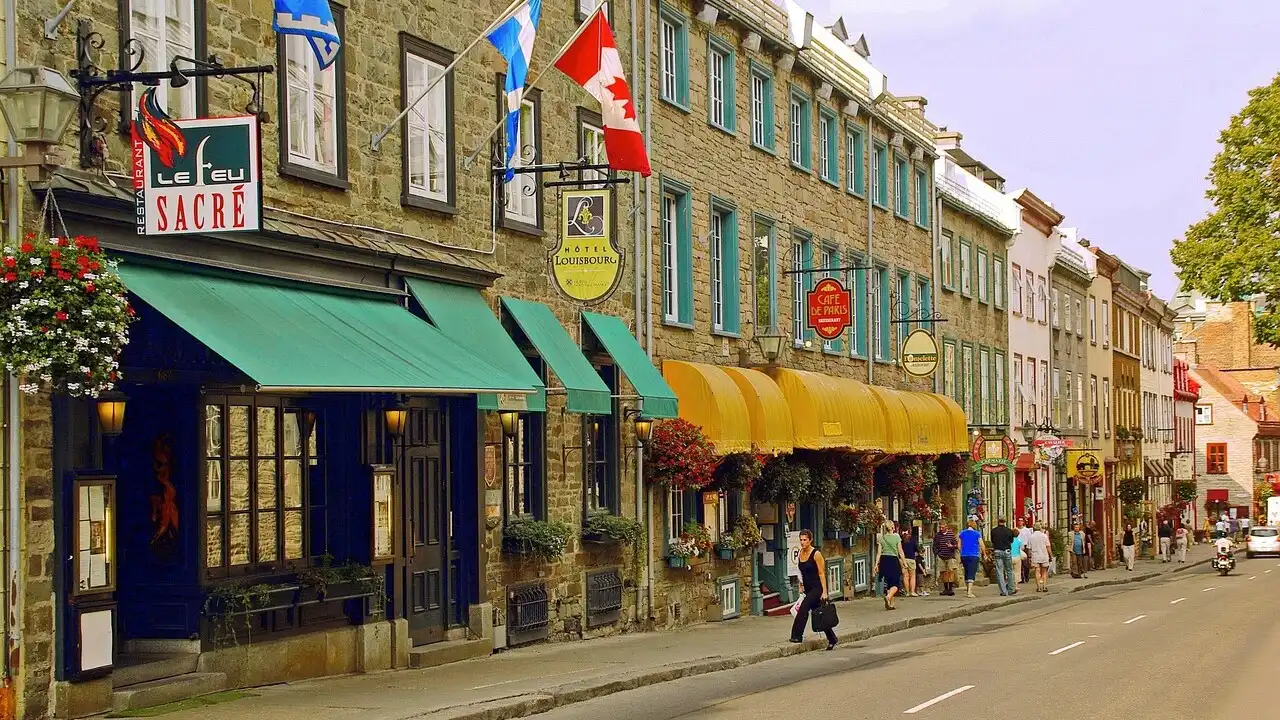
If you’ve been listening to native speakers or watching Canadian French television, you’ve probably noticed some very colourful language.
In Quebec, swear words are completely different from those used in France.
Here, we call them sacres.
As a language teacher, I always tell my students: you need to understand these words to truly understand Quebecois culture and media, but you shouldn’t rush to use them yourself.
When you learn a second language, you don’t naturally feel the “weight” or offensiveness of its swear words, so it is easy to accidentally offend someone.
In this guide, I’ll explain what sacres are, where they come from, and how they’re used in everyday Quebecois French.
Table of Contents:
What are sacres?
A sacre is a swear word used in Quebecois French.
The word sacre literally translates to “consecration” or “sacrament”. This is because almost all of the swear words in Quebec come directly from the Catholic religion.
In English, most swear words are related to bodily functions or reproduction. But in Quebec, the strongest curse words are the names of holy objects used during a Catholic church service.
To French people from France, shouting “Chalice!” or “Tabernacle!” when you stub your toe sounds confusing and a bit funny. But in Quebec, these are considered very strong words.
The history of quebecois swearing
Why do we swear with church words? To understand this, we need a quick history lesson.
For a very long time, the Catholic Church had total control over everyday life in Quebec. The Church controlled the schools, the hospitals, and dictated how people should behave. Life was very strict.
Because the Church’s rules were so strict, the ultimate form of rebellion for the working-class people was to take sacred, holy words and use them in a dirty or angry way.
During the 1960s, a period called the “Quiet Revolution” happened in Quebec. The people decided to separate the Church from the government and daily life. As people left the church behind, these religious words became the everyday curse words we still hear today.
Common quebecois sacres and their meanings
Here is a list of the most common sacres. You will notice that their spelling has changed slightly from the actual religious words to reflect how they are pronounced with a Quebecois accent.
| Quebecois Sacre | Original Church Word | Literal Meaning | English Equivalent |
|---|---|---|---|
| Tabarnak | Tabernacle | The box holding the communion bread | The F-word (Very strong) |
| Câlice | Calice | The chalice or holy cup | The F-word / Damn |
| Ostie (or Esti) | Hostie | The communion bread (Host) | Shit / Damn |
| Criss | Christ | Christ | Christ / F-word |
| Ciboire | Ciboire | The bowl holding the communion bread | Damn / Hell |
How to use sacres in a sentence
One of the most fascinating parts of Quebecois French grammar is how flexible sacres are.
In English, swear words usually stay as adjectives or verbs. In Quebecois French, a sacre can be transformed into almost any part of speech.
Here are the different ways native speakers use them:
1. As a simple exclamation of anger or surprise:

Tabarnak ! J’ai perdu mes clés.
2. As an intensifier (adverb) to mean “very”:
To do this, we put the word en before the sacre.
Il fait frette en criss dehors !
3. As a descriptive adjective:
To describe something negatively (or sometimes positively), we use un ostie de or un criss de before the noun.
C’est un ostie de gros char.
4. Turned into a verb:
We can add French verb endings (like -er) to a sacre to turn it into an action. For example, câlice becomes s’en câlisser (to not give a damn).
Je m’en câlisse de son opinion.
Mild versions (the “pg” sacres)
Just like English has “darn”, “shoot”, and “fudge”, Quebecois French has fake swear words. We call these faux sacres.
These are words that sound very similar to the real sacres, but they are polite. You will hear children, grandparents, and people in professional workplaces use these all the time.
If you want to practice expressing frustration in Quebecois French without offending anyone, I highly recommend learning these!
| Strong Sacre | Polite “PG” Version | English Vibe |
|---|---|---|
| Tabarnak | Tabarnouche / Tabarouette | Darn / Holy cow |
| Câlice | Câline / Câliboire | Shoot |
| Criss | Cristophe / Crimpe | Crikey / Crap |
| Ostie | Ostifi / Esprit | Fudge |
Here is an example of a polite, mild sacre in action:
Câline ! J’ai oublié mon portefeuille.
A quick tip for French learners:
When you are getting input (listening to podcasts, watching shows), pay attention to the emotions the speaker shows when they use a sacre. This will help you understand the context of the word much better than just reading a translation.
- Use the polite faux sacres freely!
- Listen carefully to how native speakers use the strong sacres.
- Avoid using the strong words in formal or polite situations.
